
It is 4:00 PM.
The house feels loud, even though the TV is off.
The lights seem too bright.
Your child is either bouncing off the sofa or hiding under the kitchen table.
You are exhausted, and you can feel a meltdown bubbling just under the surface.
If this sounds like your typical Tuesday afternoon, we want you to know something important.
You are not alone.
At Noa's Place, we speak to families every day who feel exactly like this.
Living in a world that wasn't designed for neurodivergent sensory needs is draining.
It is hard for our children, and it is just as hard for us as parents.
We are currently searching for a building in Halifax: a space that will eventually be a sensory-friendly hub for our community.
But while we look for that perfect 6,000-10,000 sq ft spot in Calderdale, we know that the real "work" happens in your living rooms and kitchens.
This guide is about making your home feel like a sanctuary.
Not by spending thousands on professional sensory rooms, but by making small, practical changes that help everyone breathe a little easier.
What is sensory regulation?
Think of sensory regulation like a thermostat for the brain.
For most people, this thermostat works in the background.
It automatically adjusts to the noise of a vacuum cleaner or the scratchy label on a jumper.
But for neurodivergent children, that thermostat can be a bit temperamental.
Sometimes it gets stuck on "too high," making everything feel overwhelming.
This is what people often call sensory overload.
Other times, it gets stuck on "too low," and they need to go looking for more input just to feel "right."
Regulation is simply the process of helping that thermostat get back to a comfortable setting.
The Seeker vs. The Avoider
Before you can change your home, you need to know what your child is looking for.
Most children fall into one of two categories, though many can be a mix of both depending on the day.
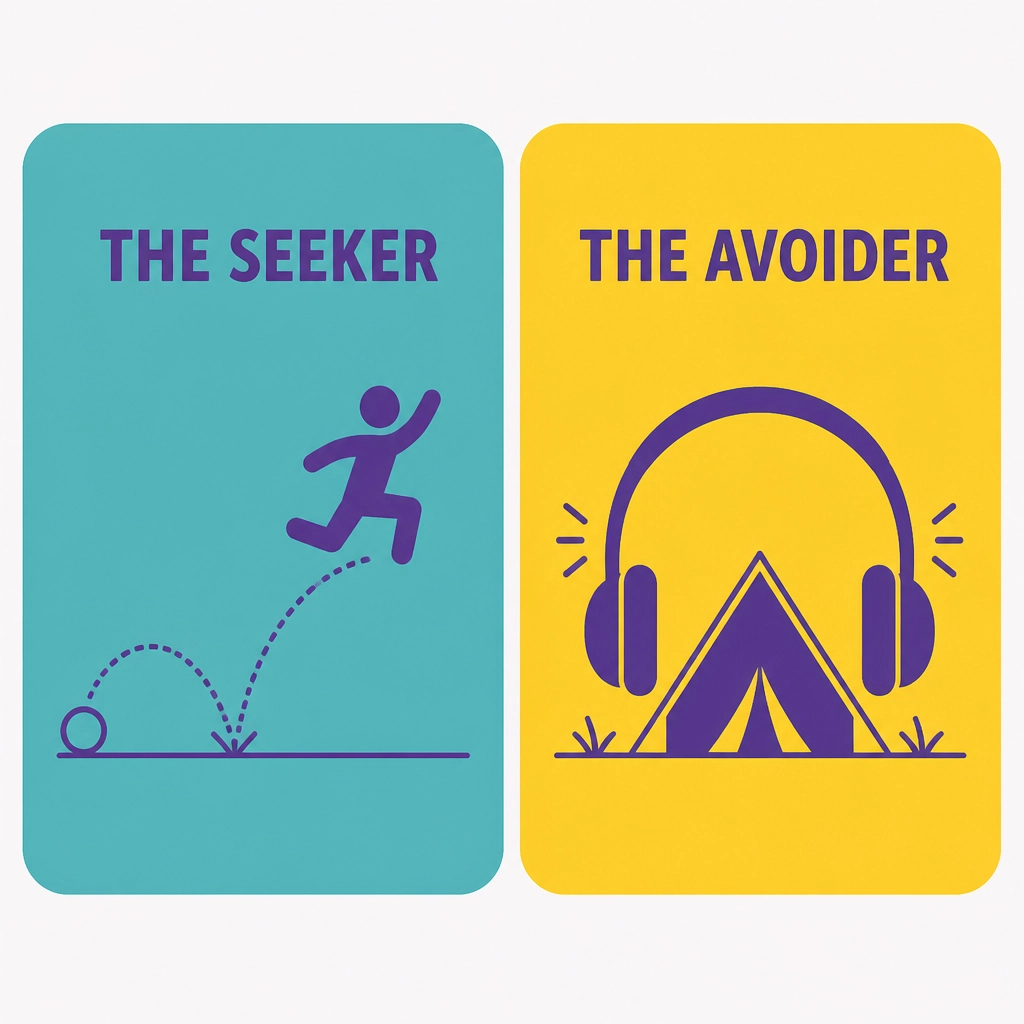
The Seeker (Hyposensitive)
Seekers are looking for more.
Their brain isn't getting enough "data" from their senses, so they try to create it.
You might notice them:
- Crashing into furniture or people.
- Making loud noises or humming.
- Touching everything they walk past.
- Spinning until they get dizzy.
The Avoider (Hypersensitive)
Avoiders are getting too much data.
The world feels like it is turned up to volume eleven.
You might notice them:
- Covering their ears at "normal" sounds.
- Hating the feeling of certain clothes or food textures.
- Squinting in bright sunlight or under big indoor lights.
- Withdrawing or hiding when things get busy.
Understanding which one your child is (or when they switch) is the first step to "zoning" your home.
Step-by-Step: Building a 'Calm Corner' on a budget
You do not need a dedicated spare room to create a safe space.
A "Calm Corner" can be a corner of the lounge, a spot under the stairs, or even a pop-up tent in their bedroom.
The goal is to create a "low-input" zone where the brain can rest.
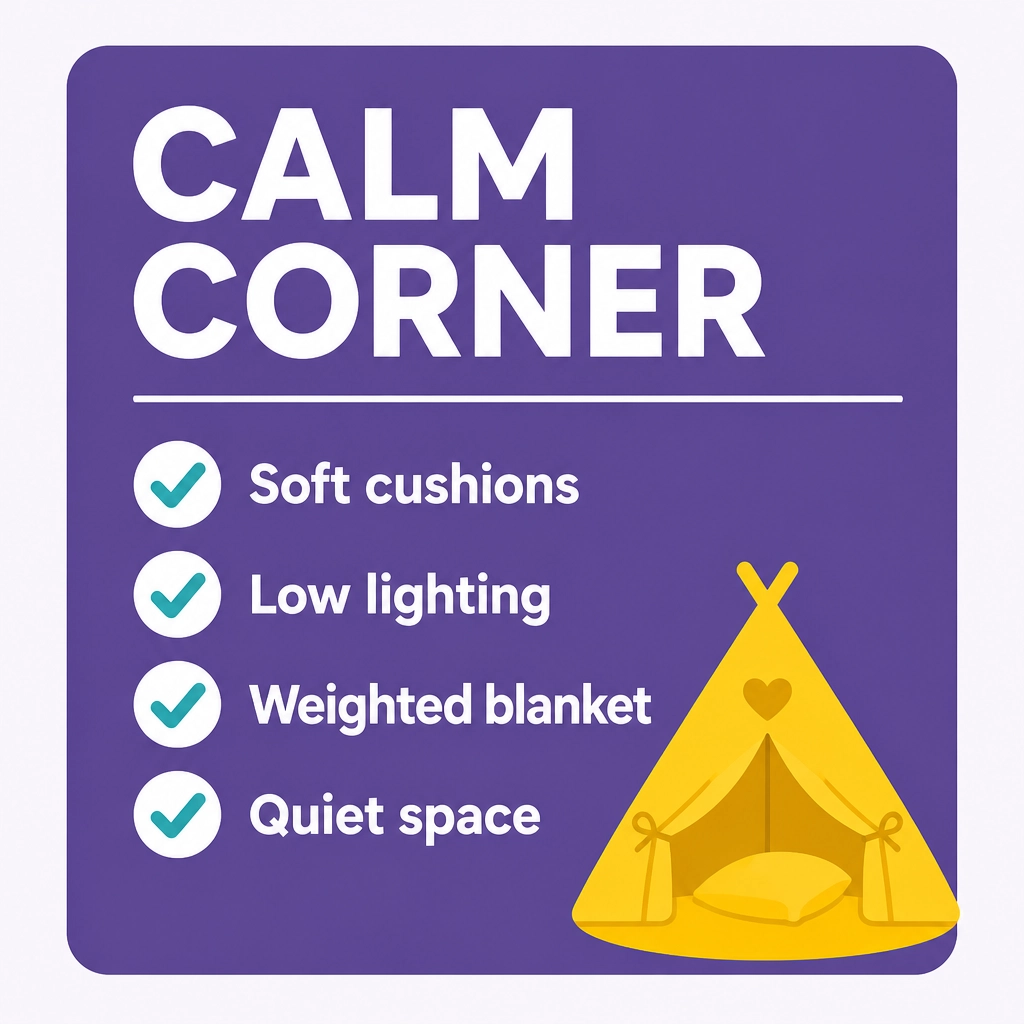
1. Define the boundaries Use a small rug, a pop-up tent, or even a large cardboard box. Physical boundaries help a child feel "contained" and safe.
2. Soften the base Layer up old duvets, sleeping bags, or cushions. The floor should be soft and inviting.
3. Control the light Avoid the big "overhead" light. Use a small battery-operated lamp or some battery fairy lights. If your child is very light-sensitive, a dark den or a heavy blanket over a table works wonders.
4. Add "The Tools" Keep a small basket of items nearby. This might include a pair of ear defenders, a favourite fidget toy, or a soft teddy. If you need more ideas, check out our interactive tools for feelings and coping.
Zoning your home
If you have a seeker and an avoider under the same roof, things can get tricky.
One wants to crash and shout; the other wants silence.
This is where "zoning" comes in.
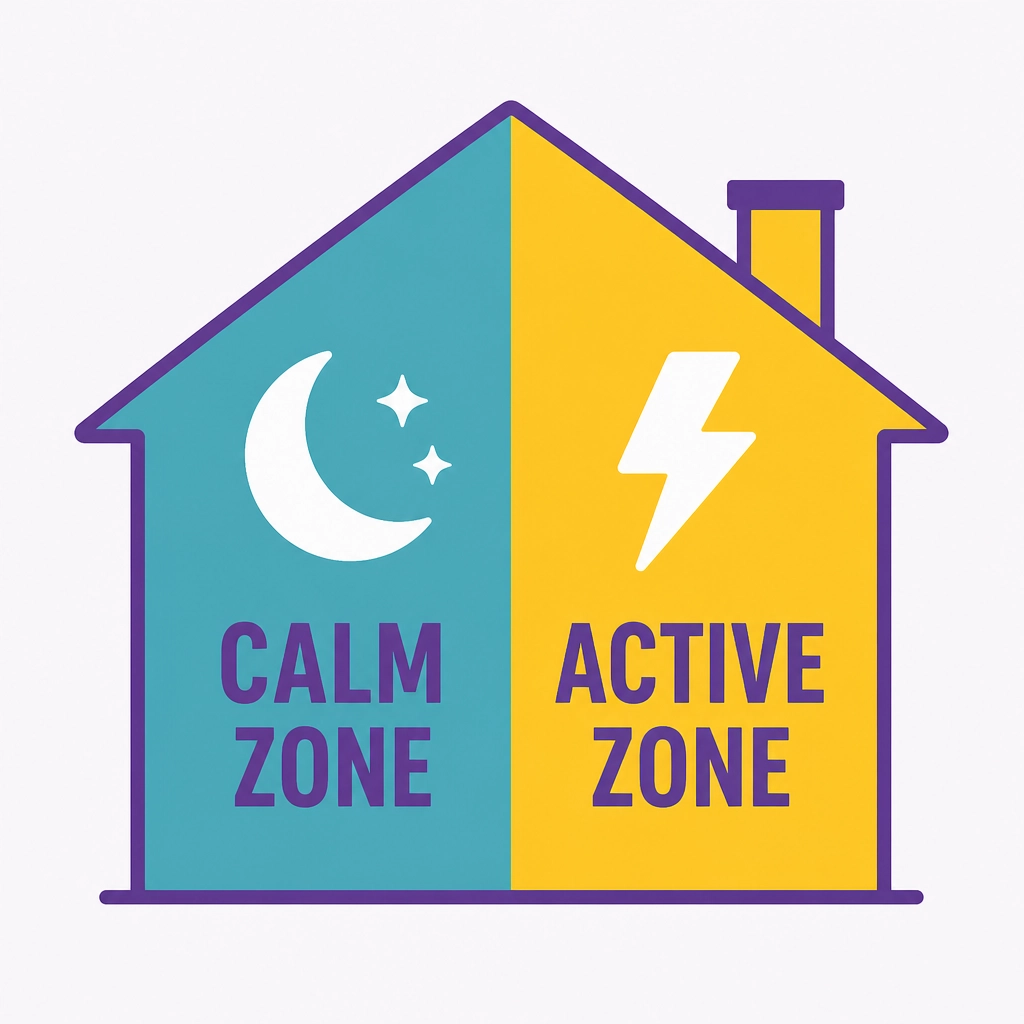
Instead of seeing your home as "rooms," try to see them as "energy zones."
The High-Energy Zone (The Kitchen or Hallway) Designate an area where it is okay to be loud and active. Maybe this is where the "heavy work" happens: pushing a laundry basket filled with books or doing wall-pushes.
The Quiet Zone (The Calm Corner or Bedroom) This is a "no-shouting" zone. If someone needs to regulate by being quiet, this is their protected space.
The Transition Zone Moving from "play time" to "dinner time" is often where meltdowns happen. Keep this area (like the hallway or dining table) clear of clutter to reduce the extra "noise" their brain has to process.
Quick fixes for noise and light
Sometimes, you can't change the whole house.
But you can change how your child experiences it.
For Noise:
- Soft furnishings: Rugs, curtains, and even wall-hangings help stop sound from bouncing around. A room with a rug is much "quieter" to a neurodivergent ear than one with hard floors.
- Headphones: They don't always need to be playing music. Sometimes just wearing noise-cancelling headphones or simple ear defenders can lower the "background hum" of the house enough to prevent a meltdown.
For Light:
- Dimmers: If you can't install dimmer switches, use lamps with warm-toned bulbs instead of the main light.
- Task lighting: If your child is doing homework or drawing, use a small desk lamp so the rest of the room can stay dim.
The power of deep pressure
Have you ever noticed your child likes to squeeze into small gaps?
Or maybe they love a really firm hug?
This is called Proprioceptive input, but we like to call it "Heavy Work."
It is one of the fastest ways to help a dysregulated nervous system feel grounded.
Deep pressure tells the brain exactly where the body is in space.
It is incredibly calming for both seekers and avoiders.
You can try:
- Weighted items: A weighted blanket or even a heavy lap-pad (you can make one by filling a pillowcase with dried rice or beans: just make sure it's sealed tight!).
- The "Sandwich": Place your child between two large cushions and give them a very gentle, firm press (always check they are happy with this first!).
- Tight clothing: Sometimes a tight-fitting vest or "under-armour" style shirt provides that constant gentle squeeze they need to feel regulated.
Child-led regulation: Giving them the remote control
The most important part of sensory regulation is teaching your child to understand their own body.
We want to give them the "remote control" to their own senses.
Instead of saying, "Go to your calm corner," try asking: "Does your body feel fast or slow right now?"
If they feel "fast," they might need a heavy work activity. If they feel "overwhelmed," they might need the calm corner.
By giving them the tools and the language to describe how they feel, we are helping them build a life-long skill.
You can find more ways to help your child express themselves in our All About Me guides.
We are right there with you
Creating a sensory-friendly home isn't about being perfect.
It is about trial and error.
Some days, the calm corner will be a hit.
Other days, it will be used as a fort for a toy battle.
That is okay.
Our goal at Noa's Place is to build a community where you don't have to explain these things.
Where you can walk in and know the lights are right, the noise is managed, and your child is accepted exactly as they are.
Until we find our physical home in Halifax, we will keep sharing what we know to help you in yours.
Keep going. You are doing a great job.
Together we make space.