
You hear the front door click. You’ve been looking forward to this moment all day: the chance to finally catch up, hear about what they learned, and enjoy a peaceful evening together.
But before you can even say "How was your day?", the backpack is on the floor, the shoes are kicked across the hallway, and your child is either screaming, sobbing, or completely shutting down.
If this sounds like your house at 3:30 PM, you aren't alone. At Noa's Place, we hear this story every single day. It’s exhausting, it’s loud, and it can make you feel like you’re failing as a parent. But I want to tell you something right now: You aren't failing. In fact, these meltdowns are actually a sign that you are doing something very right.
The "Coke Bottle" Effect: Why home feels like a war zone
To understand how to help, we first have to understand what is actually happening in your child’s brain. Experts call this After-School Restraint Collapse.
Think of your child like a bottle of fizzy pop. All day at school, they are being shaken up. They are dealing with bright lights, loud hallways, complex social rules, and the pressure to sit still. For neurodivergent children, this involves a massive amount of masking autism or ADHD traits just to "fit in" and follow the rules.
They are keeping the lid on tight. They are being "good" for the teacher. But by the time they get to the car or walk through the front door, that bottle has been shaken to its limit. The moment they see you: their safe person: the pressure is released. The lid comes off, and the "fizz" goes everywhere.
It’s not "bad behaviour." It’s a nervous system that has run out of fuel. They have experienced sensory overload for six hours straight, and home is the only place they feel safe enough to let it all out.
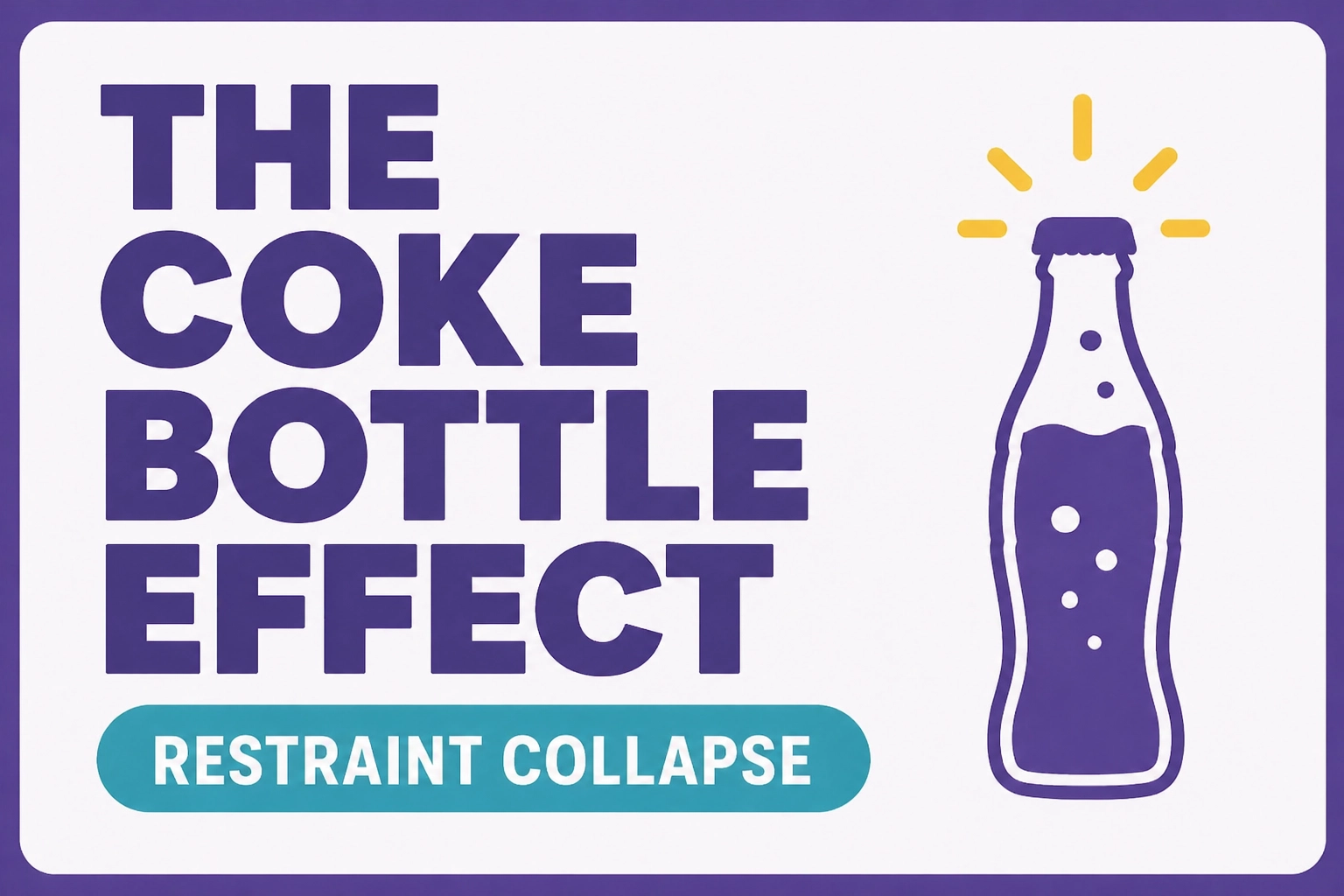 (Graphic Description: A bold, high-contrast text graphic. Large, heavy-weight sans-serif headline: "THE COKE BOTTLE EFFECT". Below it, a clean pill-shaped icon with the text "RESTRAINT COLLAPSE". Small, minimalist icon of a shaking bottle in the brand colour.)
Here are five simple, low-demand ways to help your child find their balance again.
1. The Decompression Window: No questions, just space
The biggest mistake we make (and I’ve done this plenty of times with Noa) is asking too many questions the second they get home.
"How was phonics?" "Who did you play with?" "Did you eat your ham sandwich?"
To a child who is already at their limit, these questions feel like demands. Processing language takes energy: energy they simply don't have left.
The Strategy: Implement a "No-Question Zone" for the first 30 to 60 minutes after school.
- Greet them with a smile or a simple "I'm so glad you're home."
- Keep the car ride silent or play low-energy music.
- Let them keep their headphones on.
- Save the "important" chat for later in the evening when they’ve regulated.
By removing the demand to communicate, you give their brain a chance to switch from "survival mode" back into "home mode."
2. Immediate Sensory Grounding: The power of the "Crunch and Cold"
When a child is spiralling, their internal world feels chaotic. They lose the sense of where their body is in space. One of the fastest ways to help them ground themselves is through their mouth: the oral sensory system is incredibly powerful for regulation.
The Strategy: Don't wait for them to ask. Have a "Transition Snack" ready the moment they step in.
- Crunchy: Carrots, pretzels, or apples. The heavy work of chewing sends calming signals to the brain.
- Cold: An ice-cold smoothie or water through a straw. The cold temperature and the sucking action help stimulate the vagus nerve, which tells the body it’s time to calm down.
This isn't just about hunger; it’s about emotional regulation for autism and ADHD through physical sensation. Check out our sensory overload tool for more ideas on how different inputs affect your child.
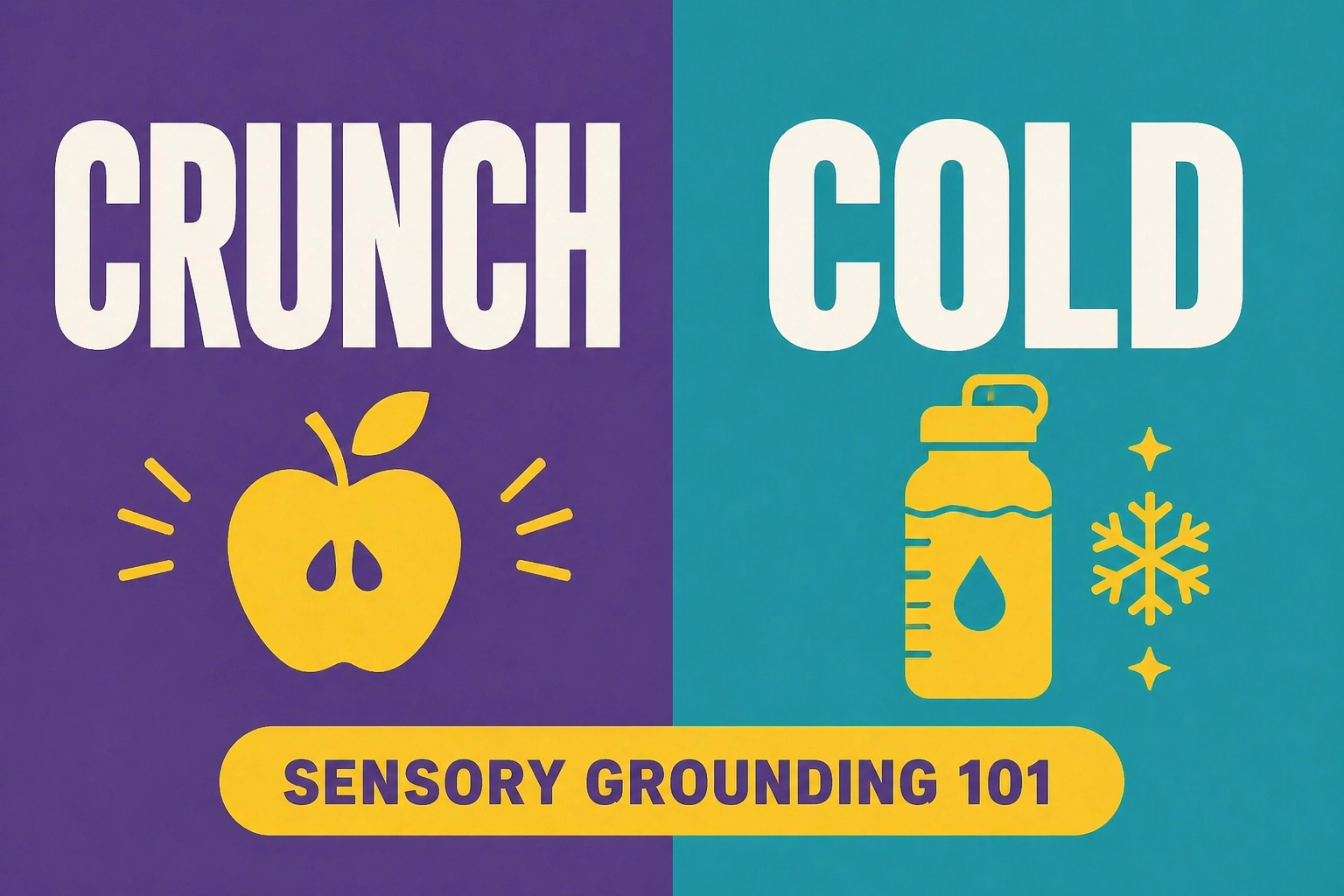 (Graphic Description: Modern marketing graphic with a split layout. Left side: "CRUNCH" in a solid colour block. Right side: "COLD" in a solid colour block. Minimalist icons of an apple and a water bottle. Bottom text: "SENSORY GROUNDING 101" in a rounded tag.)
3. Heavy Work: Proprioceptive input to settle the nerves
Sometimes, the "fizz" from that Coke bottle needs a physical outlet. If your child is "hitting, kicking, or spinning" after school, their body is literally screaming for input. This is called proprioceptive input, or "Heavy Work."
Heavy work helps the brain understand where the body is, which is incredibly grounding for a child who feels "out of control."
The Strategy: Turn the transition into a physical (but low-demand) game.
- Wall Push-ups: See how hard they can "push" the wall to make the room bigger.
- Animal Walks: Can they stomp like a bear or crawl like a crab to the sofa?
- Weighted Pressure: A heavy blanket or a firm "hug" (if they want it) can work wonders.
This isn't "exercise"; it’s a biological reset button for a fried nervous system.
4. Co-regulation: Be the "Calm Anchor"
When our kids meltdown, our own stress levels spike. We want to fix it, stop the noise, or explain why they shouldn't be upset. But you can't reason with a brain that is in "fight or flight" mode.
This is where what is co-regulation becomes your most powerful tool. Co-regulation is the process of using your calm to help settle their storm. If you get big and loud, they will get bigger and louder. If you stay low, slow, and quiet, their nervous system will eventually mirror yours.
The Strategy:
- Lower your volume: Speak in a whisper or don't speak at all.
- Get on their level: Sit on the floor near them, but give them physical space.
- Focus on your breath: Take deep, visible breaths. They will subconsciously start to match your rhythm.
You aren't ignoring the behaviour; you are supporting the child underneath the behaviour. You can use our feelings and coping tool to help track what works best for your specific child.
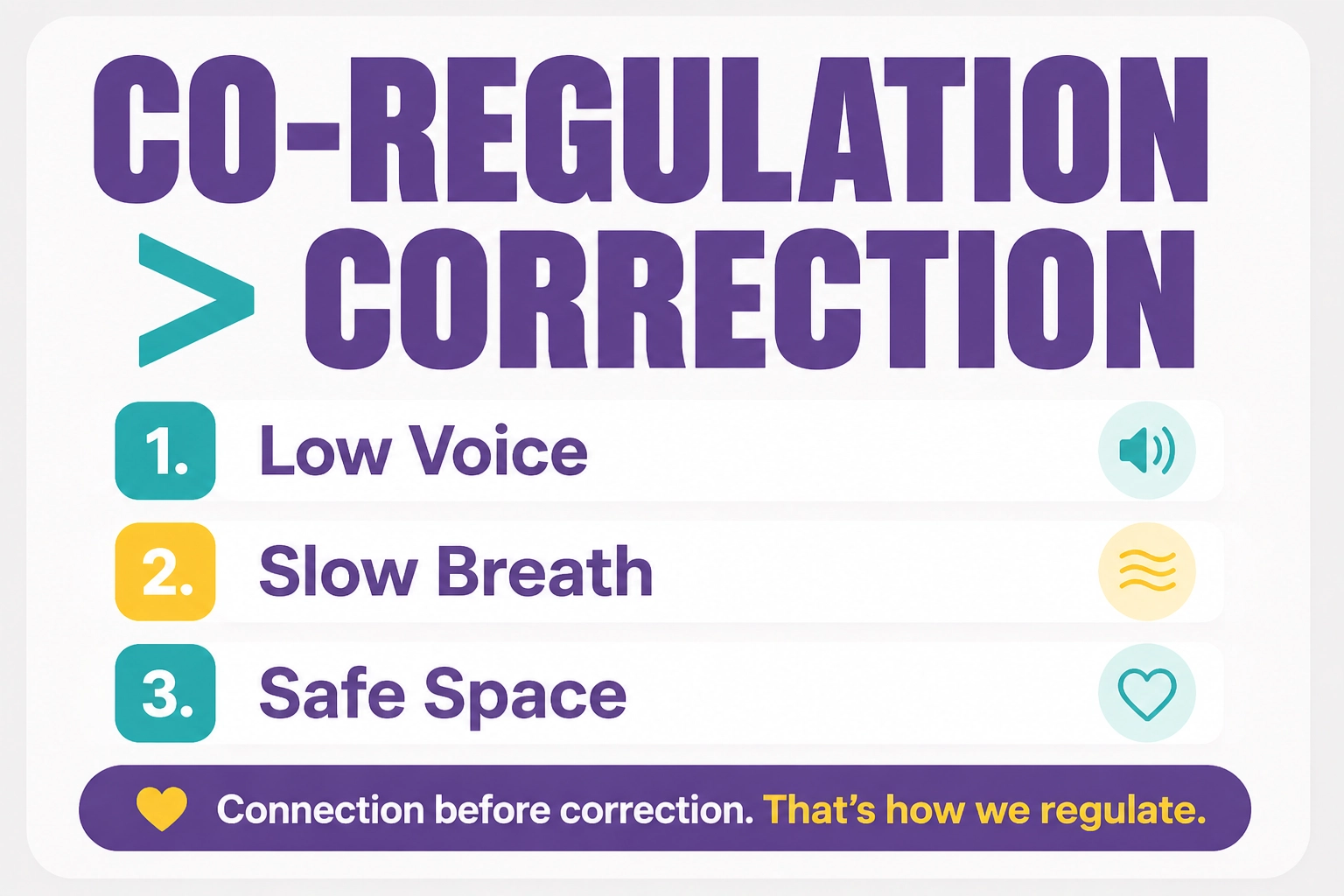 (Graphic Description: Clean, structured layout. A large headline: "CO-REGULATION > CORRECTION". Below, a short bulleted list in a clean card format: "1. Low Voice, 2. Slow Breath, 3. Safe Space". Small brand-coloured heart icon in the corner.)
5. Create a Sensory Safe Zone
The environment of a typical school is a sensory minefield. The lights hum, the chairs scrape, and the smell of the canteen is everywhere. By the time they get home, their "sensory bucket" is overflowing.
They need a place where they have 100% control over their environment.
The Strategy: Set up a permanent "Sensory Nook." It doesn't have to be fancy. A pop-up tent, a corner behind the sofa with some pillows, or even a "den" made of blankets will do.
- Include: Fidget toys, a weighted lap pad, or noise-cancelling headphones.
- Lighting: Keep it dim. Avoid harsh overhead lights.
- Rules: This is a "No-Demand Zone." No chores, no homework, and no talking unless they start it.
If you need help identifying what should go in your child's safe zone, our sensory profile tool (which works for kids too!) can help you figure out what they find soothing versus what they find irritating.
You are their safe place
It is incredibly draining to be the target of an after-school meltdown. It’s easy to think, "They are fine at school, so it must be something I'm doing wrong at home."
I want you to flip that thinking.
They are holding it together all day in a world that wasn't built for them. They are exhausted, overwhelmed, and vulnerable. The fact that they "explode" the moment they see you is actually a compliment. It means they know, deep down, that your love is unconditional. They know that even when they lose control, you will be there to help them find it again.
 (Graphic Description: Bold marketing card. Headline: "HOME IS THE SAFE HARBOUR". Subtext: "The meltdown isn't the problem: it's the release." Small brand-coloured anchor icon.)
At Noa's Place, we’re working hard on our CIO application so we can do even more to support families like yours. For now, we are right here with you online, building the tools and the community we all need.
If today was a "backpack-throwing" kind of day, take a deep breath. You’ve got this, and we’ve got you.
Want to learn more about your child's specific needs? Check out our Interactive Tools to create a personalised plan for your child, or Contact Us to join our growing community.