It starts with a stomach ache.
Then comes the "I can't go" or the quiet, heavy dread that fills the house before the sun is even up.
If your morning feels like a battleground, or a house of cards that collapses every Sunday night, you aren't alone. We are right there with you.
Many families in Halifax and across Calderdale are facing the same struggle. It has a name: EBSA.
What is EBSA?
EBSA stands for Emotionally Based School Avoidance.
It is a fancy term for a very simple, painful reality: a child cannot cope with the thought of being in school.
It is often mistaken for "naughty" behaviour or "truancy," but they couldn't be more different.
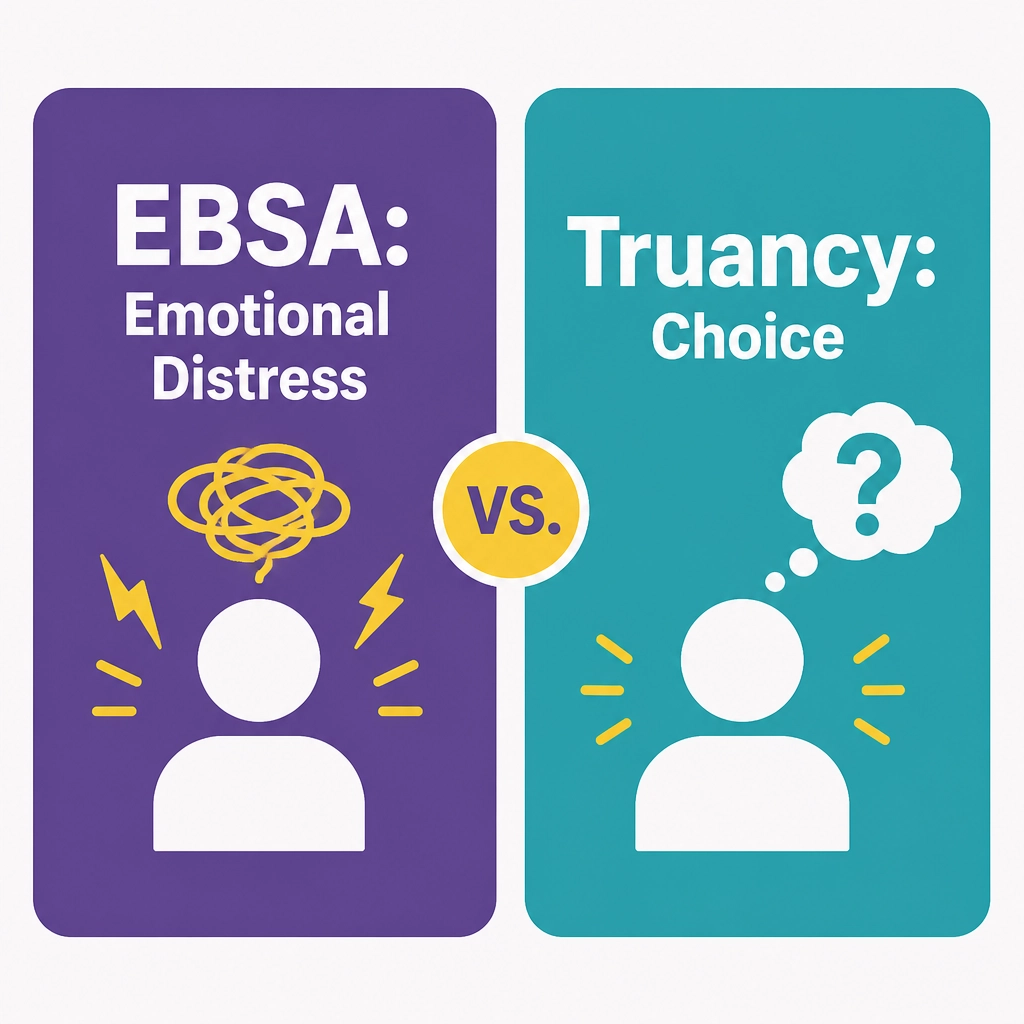
Truancy is usually a choice. The child might skip school to do something they find fun.
EBSA is not a choice. It is a response to overwhelming anxiety.
When a child experiences EBSA, their brain is in "survival mode." They aren't trying to be difficult; they are trying to feel safe.
Why neurodivergent children struggle
For neurodivergent children, including those with autism, ADHD, or sensory processing differences, school can be an incredibly loud, bright, and unpredictable place.
They might be "masking" all day. This means they are working double-time to act like everyone else and hide their struggles.
By the time they get home, they are exhausted. The thought of doing it all again the next day feels impossible.
It’s like being asked to run a marathon every single day with no rest. Eventually, the body and mind just say "no."
Spotting the signs
EBSA doesn’t always look like a loud meltdown. Sometimes it’s very quiet.
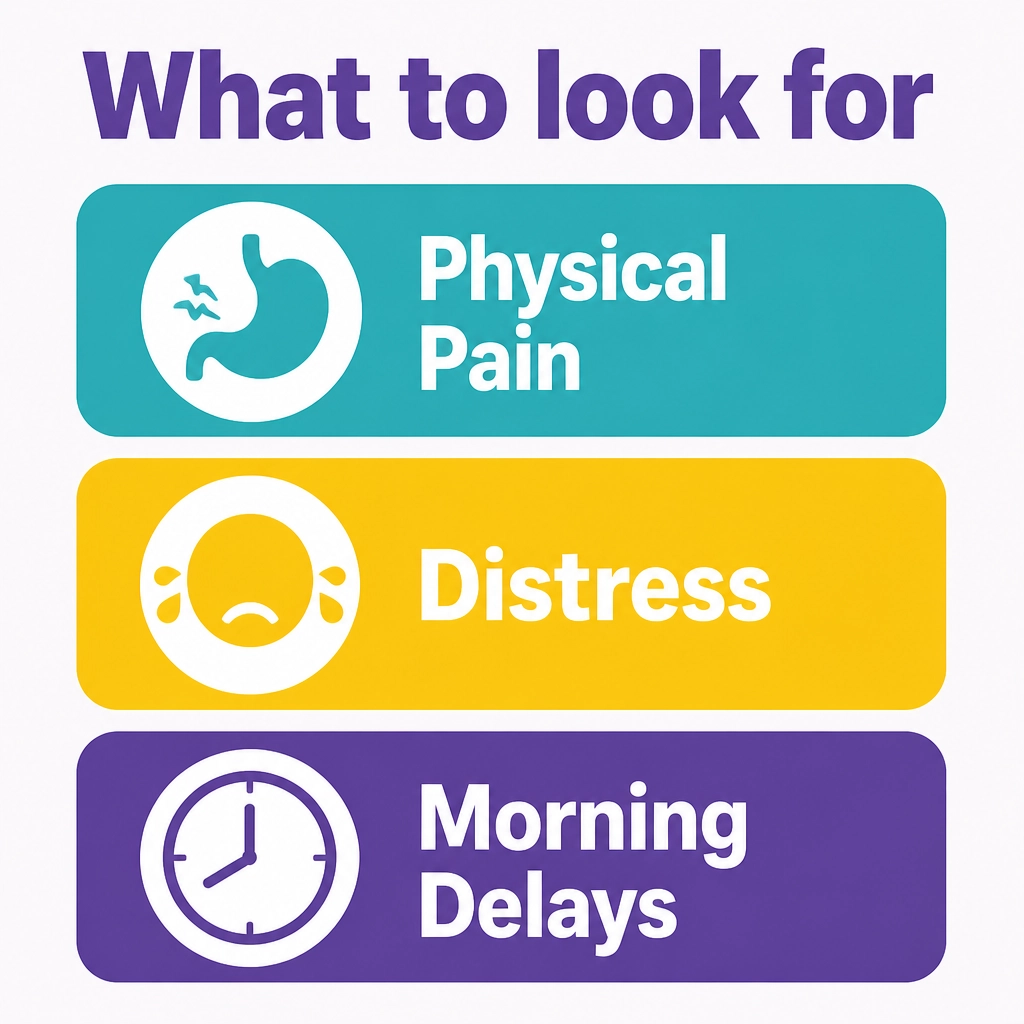
Common signs include:
- Physical pain: Feeling sick, having a racing heart, or real stomach aches that mysteriously disappear on Saturdays.
- Morning delays: Taking ages to get dressed or "forgetting" how to put on shoes.
- Changes in mood: Becoming tearful, angry, or very withdrawn as Monday approaches.
- Sleep issues: Having trouble falling asleep or having nightmares about school.
If you are seeing these signs, our interactive tools for feelings and coping can help you start a gentle conversation with your child about how they feel.
The power of co-regulation
When your child is panicking, their nervous system is "dysregulated." They cannot think clearly or listen to logic.
This is where co-regulation comes in.
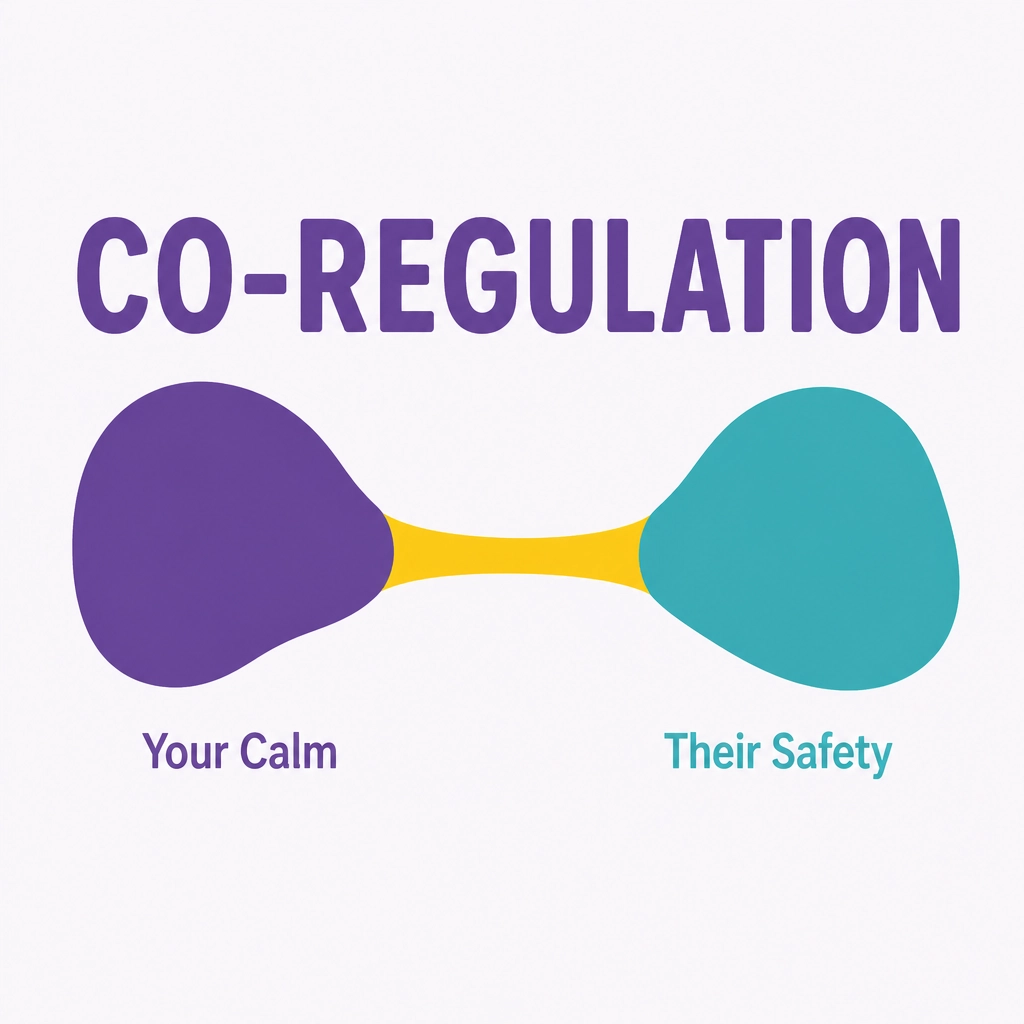
Co-regulation means using your own calm to help them find theirs.
It isn't about fixing the problem immediately or forcing them out the door. It’s about being a "safe harbour."
When you stay calm and empathetic, you show their brain that they are safe. This is the first step toward getting them back to a place where they can learn.
Our guide on managing sensory overload might offer some quick ways to create a calmer environment at home during these high-stress moments.
Taking practical steps in Calderdale
You don't have to navigate this journey alone. There is a path forward, and it starts with communication.
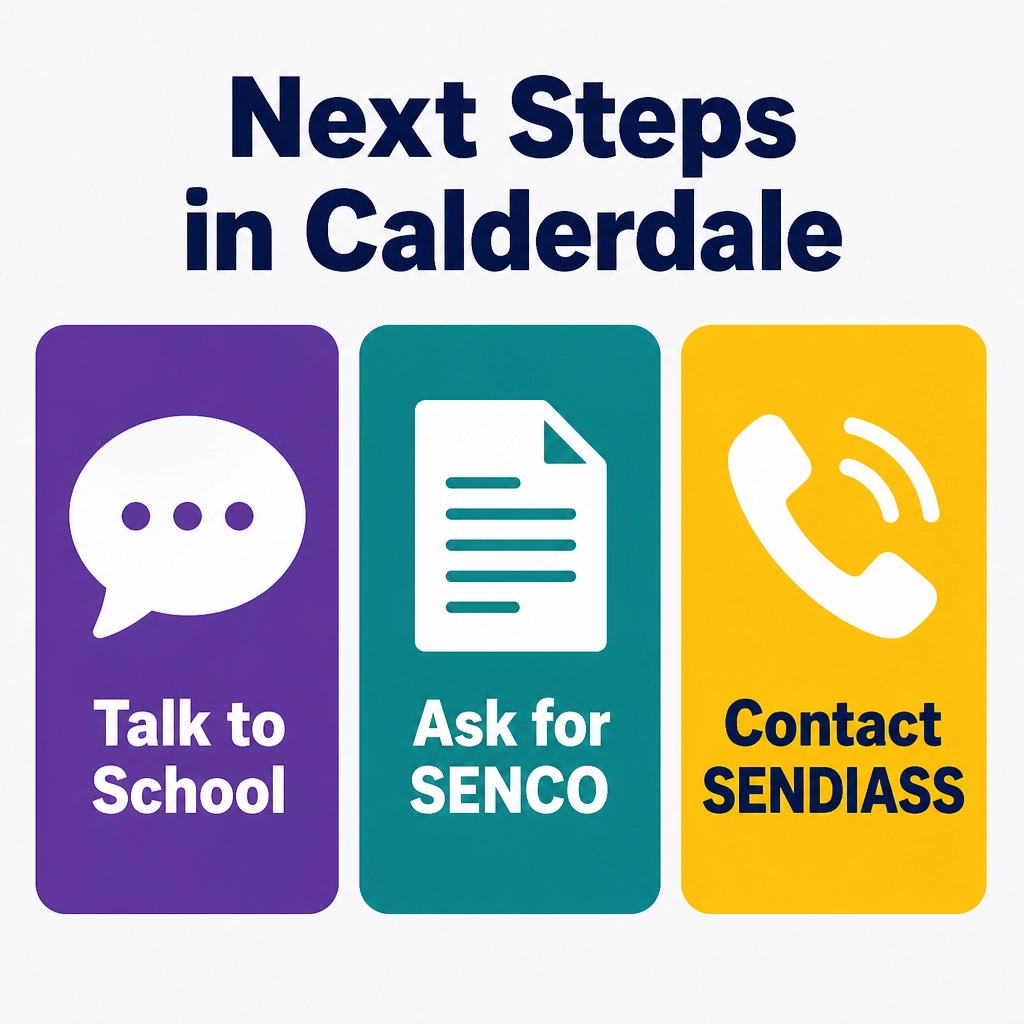
- Talk to the school: Contact your child’s class teacher or the SENCO (Special Educational Needs Co-ordinator). Share what is happening at home.
- Focus on safety, not attendance: Ask for a "phased return" or a "safe space" in school where your child can go when they feel overwhelmed.
- Ask what framework they are using: Some schools in Calderdale and across West Yorkshire are increasingly using EBSA toolkits and specialised support frameworks to understand patterns, reduce anxiety, and plan a more realistic return. If your school mentions an EBSA toolkit, ask to see how it is being used and what practical changes will come from it.
- Seek external support: Reach out to Calderdale SENDIASS for free, impartial advice on your rights and how to get more help.
- Look into SEMH support: EBSA is often recognised under Social, Emotional and Mental Health (SEMH) needs. This can open doors to more formal support, like an EHCP (Education, Health and Care Plan).
Small Wins and Sensory Strategies for the School Run
Some mornings are about getting all the way into school.
Some mornings are about getting dressed, getting in the car, or making it to the end of the road.
That still matters.
When a child is overwhelmed, big goals can feel impossible. Smaller, gentler steps can help their nervous system feel safer.
One thing that can help is a transition object.
This is just a small thing your child can carry from home to school. It might be a sensory toy, a soft keyring, a smooth stone, or even a wristband with a spray of mum or dad's perfume on it.
The point is not the object itself. The point is familiarity. Something that smells, feels, or looks like home can make the move from one place to another feel less sharp.
Your words matter too.
Try low-arousal language. That means keeping your voice calm, your sentences short, and your instructions simple.
Instead of lots of questions or rushed reminders, it can help to say:
- "Shoes on."
- "I'm with you."
- "One step at a time."
- "Let's just get to the car."
This lowers the pressure. It gives your child less to process when their brain is already overloaded.
It can also help to talk with school about a safe space.
This could be a quiet room, a corner in a classroom, a pastoral base, or another calm spot where your child can land before the full school day begins. For some children, knowing there is a place to breathe can make the gates feel less frightening.
And if they do not make it through the gates, that does not mean the morning was a failure.
Trying matters.
Putting shoes on matters.
Sitting in the car matters.
Walking part of the way matters.
Celebrate the effort, not just the outcome. That is often where trust and progress begin.
It is not your fault
We want to say this clearly: This is not because of your parenting.
Society often puts a lot of pressure on parents to "just be firmer." But you cannot "firm" your way out of an anxiety disorder or a sensory processing issue.
You are doing the best you can in a system that wasn't built for your child.
At Noa's Place, we are working hard to build a permanent hub in Halifax where families can find the understanding and community they deserve. We want to create a space where your child can just be, without any pressure to mask or fit in.
Until that building is ready, know that we are here as a community.
Take a deep breath. You are doing a great job.
Together we make space.