It starts with something small.
Maybe you’ve asked them to put their shoes on so you can get to school. Or perhaps it’s time to turn off the tablet for dinner.
Suddenly, the air in the room changes.
What should have been a simple transition turns into a full-blown meltdown, a rigid "no", or your child disappearing under a duvet.
If this sounds like your daily reality, you might be familiar with Pathological Demand Avoidance (PDA).
But in the neurodivergent community, many of us are moving toward a name that feels a bit more human: Pervasive Drive for Autonomy.
Whatever you call it, living with PDA is exhausting.
We are right there with you.
What is PDA? (Beyond the clinical name)
PDA is often described as a profile on the autism spectrum.
The traditional name, Pathological Demand Avoidance, sounds clinical and, let’s be honest, a bit negative.
It makes it sound like the child is choosing to be difficult.
When we look at it as a Pervasive Drive for Autonomy, everything changes.
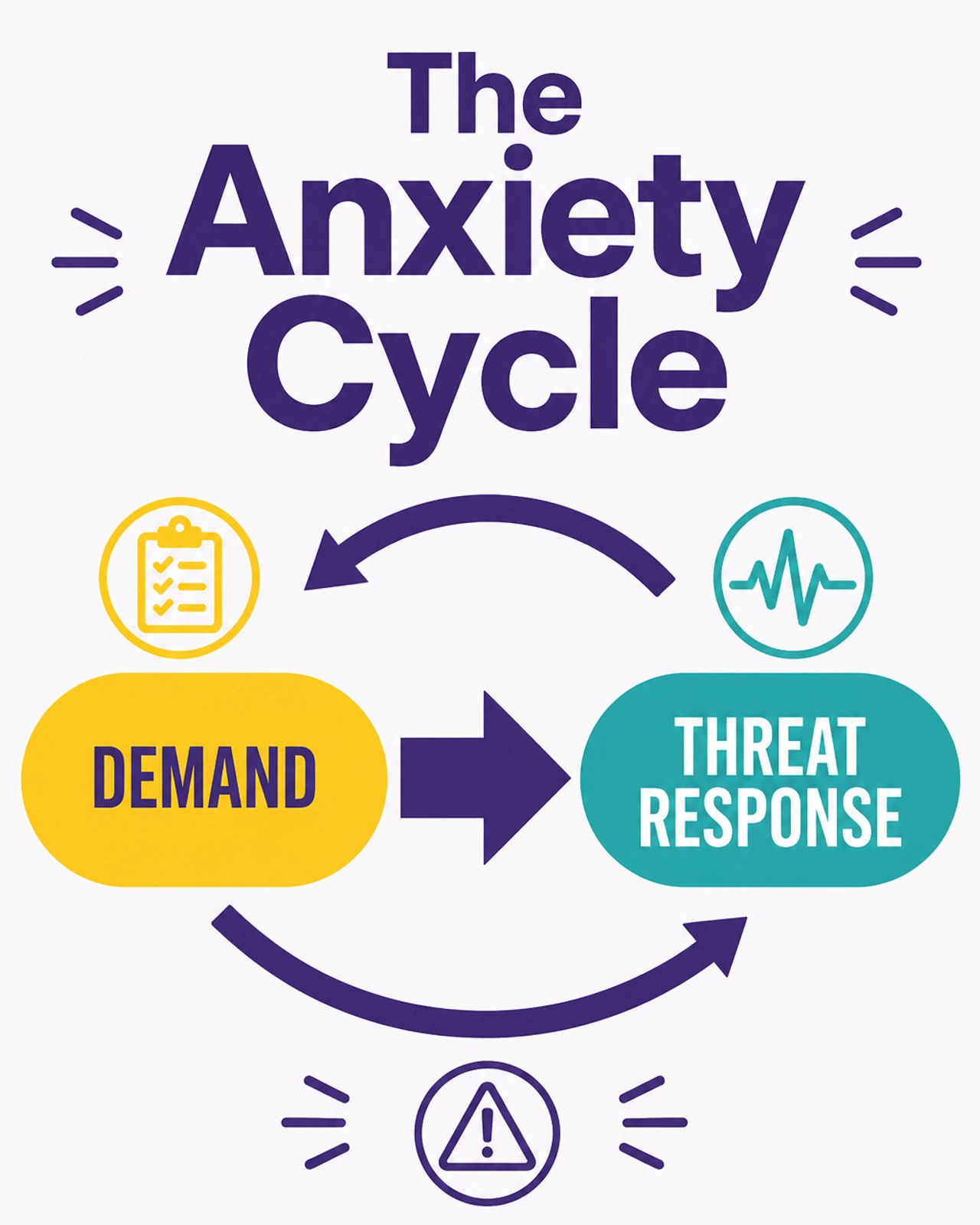
It’s not that your child won't do what you’ve asked. It’s that their brain literally can't process the demand because it feels like a threat to their safety.
Autonomy isn't just a "want" for a PDAer; it’s a biological necessity.
Without it, they feel like they’ve lost control of their world.
The 'Anxiety' behind the avoidance
To understand PDA, you have to understand the "anxiety bucket."
Every child has a limit on how much stress they can take.
For a child with PDA, everyday demands, things like brushing teeth, eating, or even being told "have a nice day", act like drops of water in that bucket.
When the bucket overflows, the brain’s "threat response" kicks in.
This isn't "naughty" behaviour. This is fight, flight, or freeze.
To your child, a simple request to "put your coat on" can feel as terrifying as being asked to step into a cage with a lion.
Their nervous system screams "Danger!", and they react accordingly to regain a sense of safety.
This is why PDA support in the UK is so focused on nervous system regulation rather than discipline.
Why 'Because I said so' doesn't work
In most parenting books, the advice is clear: be firm, use rewards, and set consequences.
For a PDA child, this is like pouring petrol on a fire.
Traditional parenting relies on a hierarchy, the adult is in charge, and the child follows.
For someone with a pervasive drive for autonomy, that hierarchy is the ultimate demand.
Rewards feel like a bribe (a demand to perform).
Consequences feel like a threat (a demand to comply).
Both increase anxiety, which fills the bucket even faster.
If you’ve spent years feeling like "the only parent whose child doesn't listen to logic," it’s probably because your child’s brain is wired to resist that very logic if it feels like a loss of control.
Practical strategies: The 'Low Demand' toolbox
So, how do you get through the day?
The shift is moving from a "manager" role to a "collaborator" role.
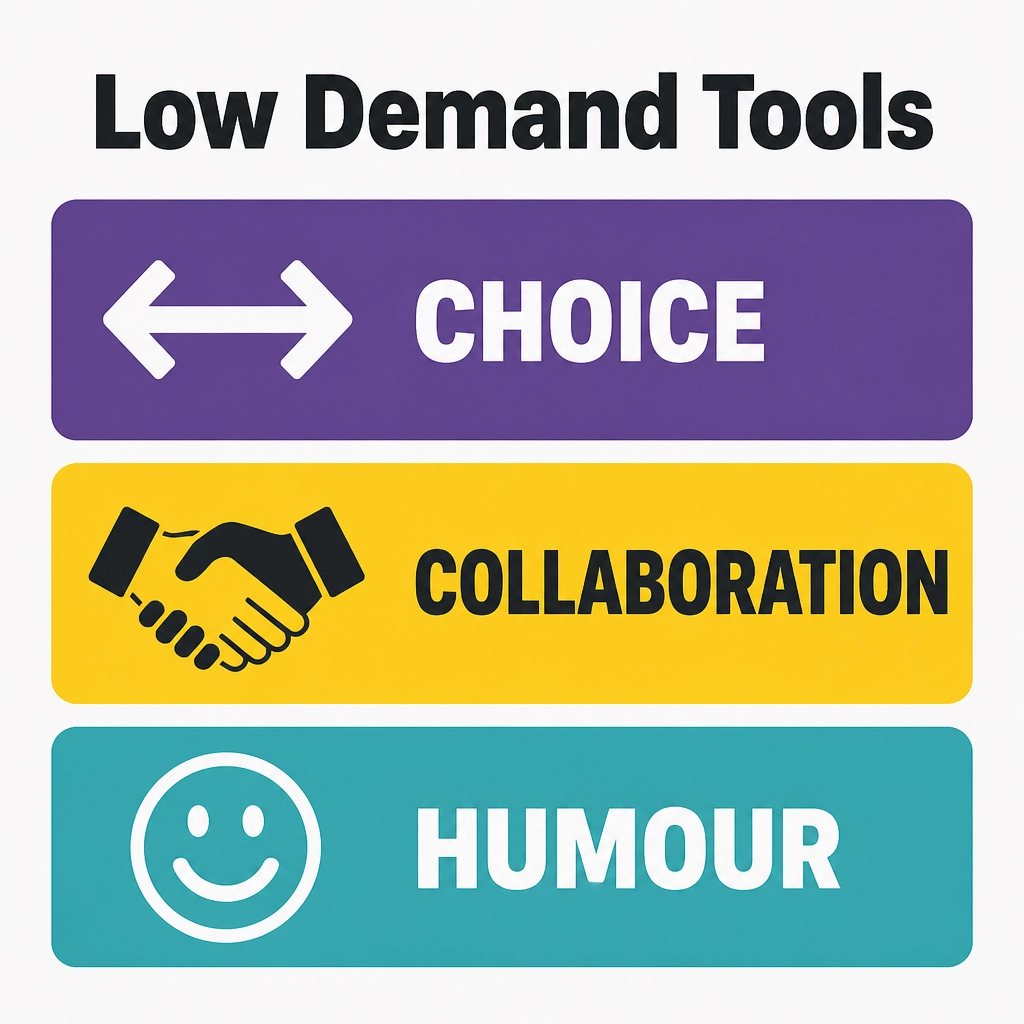
This is often called Low Demand Parenting. It doesn't mean having no rules; it means changing how those rules are presented.
1. Rephrase the demand
Instead of "Go brush your teeth," try "I wonder if we have enough toothpaste for both of us?" Using "I wonder..." or "I’m not sure if..." depersonalises the demand.
2. Give real choice
Don't just ask them to do something. Give them the "how" or "when." "Do you want to get dressed in the bedroom or the lounge?" This gives them back that vital sense of autonomy.
3. Use humour
Humour is a fantastic way to lower anxiety. Making a mistake on purpose or being a bit silly can break the tension and make a task feel less like a "must-do" and more like an "us-do."
4. Collaborative problem solving
Sit down when things are calm. "I've noticed mornings are really tricky for your body. What could we change to make them feel easier?" When they help build the plan, they are much more likely to follow it.
If you're looking for more ways to understand these feelings, our interactive tools are designed to help families navigate these tricky moments together.
You’re not a 'bad parent'
This is the most important thing we can tell you.
When you’re raising a child with PDA, you face a lot of judgement.
From people in the supermarket who think your child needs "a firm hand," to professionals who suggest you just need to be "more consistent."
It can make you feel isolated and like you’re failing.
You are not failing.
You are parenting a child on "Hard Mode."
The fact that you are here, reading this and trying to understand their world, shows how much you care.
Raising a child with a pervasive drive for autonomy requires a level of patience, creativity, and resilience that most people will never have to tap into.
Give yourself some grace. You are doing a grand job.
How Noa's Place supports PDA families
At Noa’s Place, we get it.
We know what it’s like to spend your morning negotiating a single pair of socks.
We know the "after-school restraint collapse" that happens when a child masks all day at school only to explode the moment they hit the front door.
We are working hard to secure a physical home in Halifax to provide SEND support in Calderdale.
Our vision is a community hub where your child doesn't have to mask.
A place where "no" is respected, where sensory needs come first, and where you: the parent: can finally take a breath without feeling judged.
Whether you need practical advice on neurodiversity support or just a community that "gets it," we are building this for you.
You don't have to navigate the world of Pathological Demand Avoidance alone.
We are right here with you.
Together we make space.