
You’ve probably been there.
It’s a Saturday morning in Halifax. You want to take the kids out, but you’re already mentally scanning every local venue.
Is it too loud? Will the lights be too bright? Is there somewhere quiet to go if it all gets a bit much?
For many SEND families, a simple trip to a soft play or a cafe isn’t simple at all. It’s a tactical operation.
When you start typing "sensory room near me" into your phone, you’re usually looking for more than just a room with some bubble tubes.
You’re looking for a breath of fresh air. You’re looking for a place where your child can just be, without the pressure to fit in or mask.
At Noa’s Place, we get it. We are right there with you, and we know exactly why these spaces are so vital for our community.
The search for 'calm' in a noisy world
The world is naturally loud.
For neurodivergent children and adults, that "loudness" isn't just about sound. It’s the bright supermarket lights, the smell of the food court, and the unpredictable energy of a crowded park.
By the time many families arrive at a destination, their "sensory bucket" is already full.
Standard play centres often make this worse. They are designed for high energy and high noise. While they can be fun, they often lead to sensory overload, which can result in meltdowns or complete shutdown.
This is why a dedicated sensory room is a game-changer. It isn't just a "nice to have", for many, it is the difference between being able to leave the house or staying home.

What are the benefits of a sensory room?
A well-designed sensory space does a lot of heavy lifting for the nervous system. Here is why they are so helpful:
1. Self-Regulation
This is the big one. Regulation is the ability to manage your emotions and bodily responses to the environment.
A sensory room provides a controlled environment where a child can use specific tools, like weighted blankets, swings, or soft lighting, to bring their body back to a state of calm.
2. Reducing Meltdowns
Meltdowns are often the result of sensory overload. When a child has access to a "reset" space, they can decompress before they reach that breaking point.
It’s like having a safety valve for a pressure cooker.
3. Improved Focus
It’s hard to focus when your brain is busy trying to filter out the hum of a fridge or the flickering of a lightbulb.
Spending time in a low-stimulus environment allows the brain to rest. Often, after a session in a sensory room, children find it much easier to engage in learning or conversation.
4. Sensory Exploration
For some children, they need more input, not less. Sensory rooms allow for safe exploration of textures, colours, and movements that might be too overwhelming in the "real world."

Why 'standard' play centres often fail our kids
We’ve all seen the "inclusive" sessions at local play centres. While the intention is great, the physical space often remains the same.
Large, echoey halls and primary-coloured plastic are still sensory triggers, even if the music is turned down.
When a space isn’t designed with neurodiversity at its heart, families still feel that "on edge" feeling. You find yourself apologising for a noise or a behaviour that is perfectly natural for your child.
In a true sensory-friendly environment, there is no need to apologise. There is no need to mask. You are not alone in your experience, and the space is built to hold you, exactly as you are.
What to look for in a good sensory room
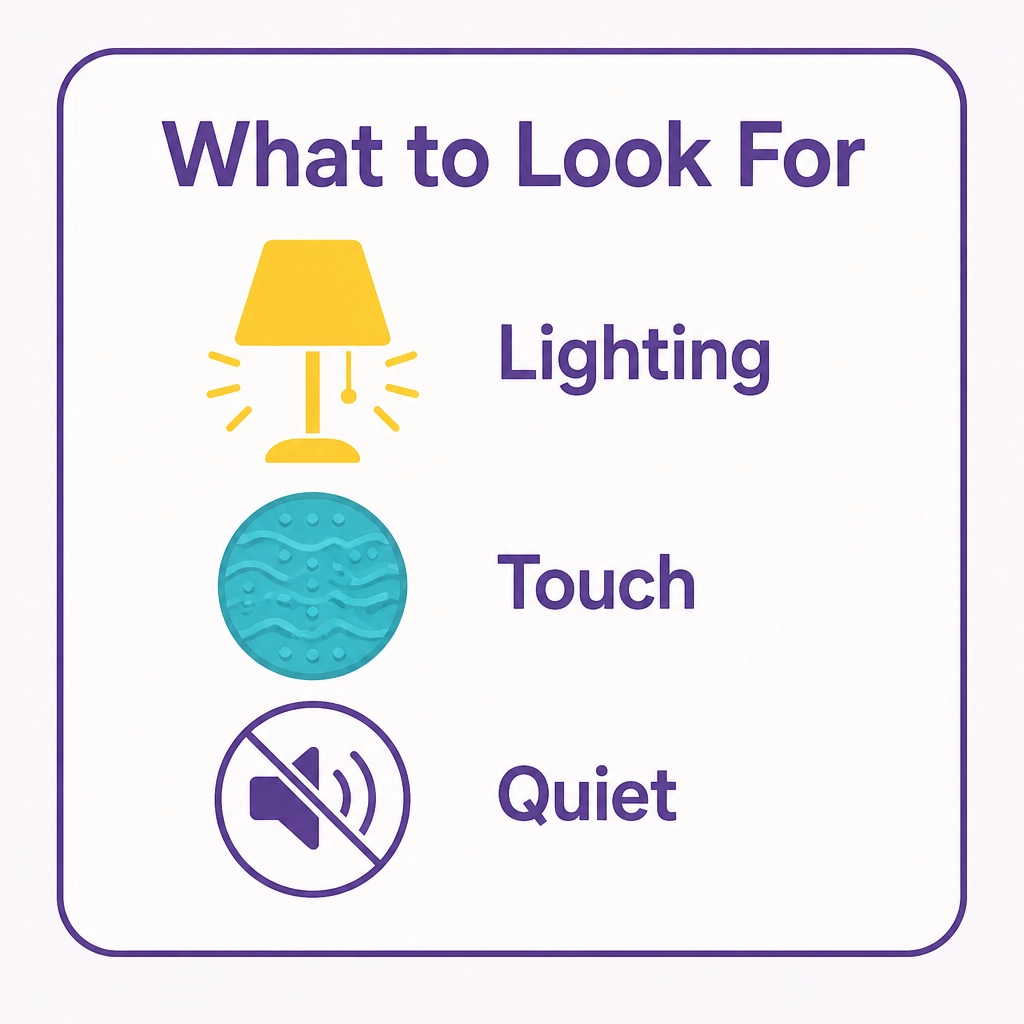
If you are looking for a space to visit, here are a few things that make a sensory room truly effective:
- Controllable Lighting: Can the lights be dimmed? Are there bubble tubes or fibre optics that the user can interact with?
- Acoustic Treatment: Does the room feel quiet, or does it echo? Good spaces use soft materials to dampen sound.
- Varied Textures: From soft beanbags to textured wall panels, having different things to touch helps with grounding.
- Quiet Zones: There should be a "dark" or "extra quiet" corner for those who need a total blackout from stimulation.
- Safety and Accessibility: Is it easy to get into? Is the equipment sturdy and safe for all ages?
Noa's Place: Our vision for Halifax
We know that finding these spaces in West Yorkshire can be a struggle. That is why we are working so hard to change the landscape for SEND families in Halifax.
Currently, we are searching for the perfect physical home for Noa’s Place. We are looking for a building in the Halifax or Calderdale area that is between 6,000 and 10,000 sq ft.
Our goal is to build a world-class inclusive hub. This won't just be one room; it will be a community space designed from the ground up for accessibility.
We are planning:
- State-of-the-art sensory rooms for both kids and adults.
- An indoor playground that won't cause overload.
- A community café where you can actually relax.
- Flexible event spaces for support groups and workshops.
Whilst we don't have our doors open just yet, we are already building the community that will fill it.

How we support you right now
You don't have to wait for a building to get support.
We have developed a range of free interactive tools designed to help you navigate the daily challenges of SEND life.
Whether you need help understanding sensory overload or you're looking for coping strategies for your child, these tools are here for you to use today.
We also offer specific guides for different ages, including teens and adults, because we know that neurodiversity doesn't stop when you turn eighteen.
You are part of the journey
Finding a sensory room near you shouldn't feel like finding a needle in a haystack. It should be a standard part of our community.
We are dedicated to making that a reality in Halifax. We want to create a space where every family feels seen, understood, and supported.
If you want to keep up to date with our search for a building or learn more about our plans for the hub, please do stay in touch.
We are building this for you, with you.
Together we make space.