In a hurry? The short version:
- Occupational therapy (OT) focuses on sensory processing and everyday functional skills, not just behaviour.
- Traditional clinical settings can overwhelm autistic children, making home-based or community-based strategies much more effective.
- You can access support through the Calderdale SEND Local Offer, NHS pathways, or private specialists like The Little OT Company.
- Simple adjustments at home: like deep pressure and movement breaks: can reduce dysregulation tonight without special equipment.
- Full guide below.
You are sitting in a chilly meeting room at a primary school near King Cross, clutching a lukewarm cup of tea. Across the table, a well-meaning teacher leans forward and says the sentence that makes your stomach drop: "We just think it's behavioural. Have you tried clearer boundaries at home?"
Your chest tightens. You know it is not a behaviour issue. You know your child is burning out from sensory overload after two hours in a noisy classroom where the strip lighting hums like a jet engine. You have spent eighteen months waiting for an NHS assessment, reading clinical papers at 11pm on your phone, and wondering why nobody seems to understand the reality of family life in Calderdale.
Battling a system that labels your child instead of supporting them is exhausting. When every professional seems to look at the symptom rather than the nervous system, you are left carrying the weight alone. Finding the right practical key can change everything, and for many families, that key is occupational therapy.
What does an occupational therapist actually do?
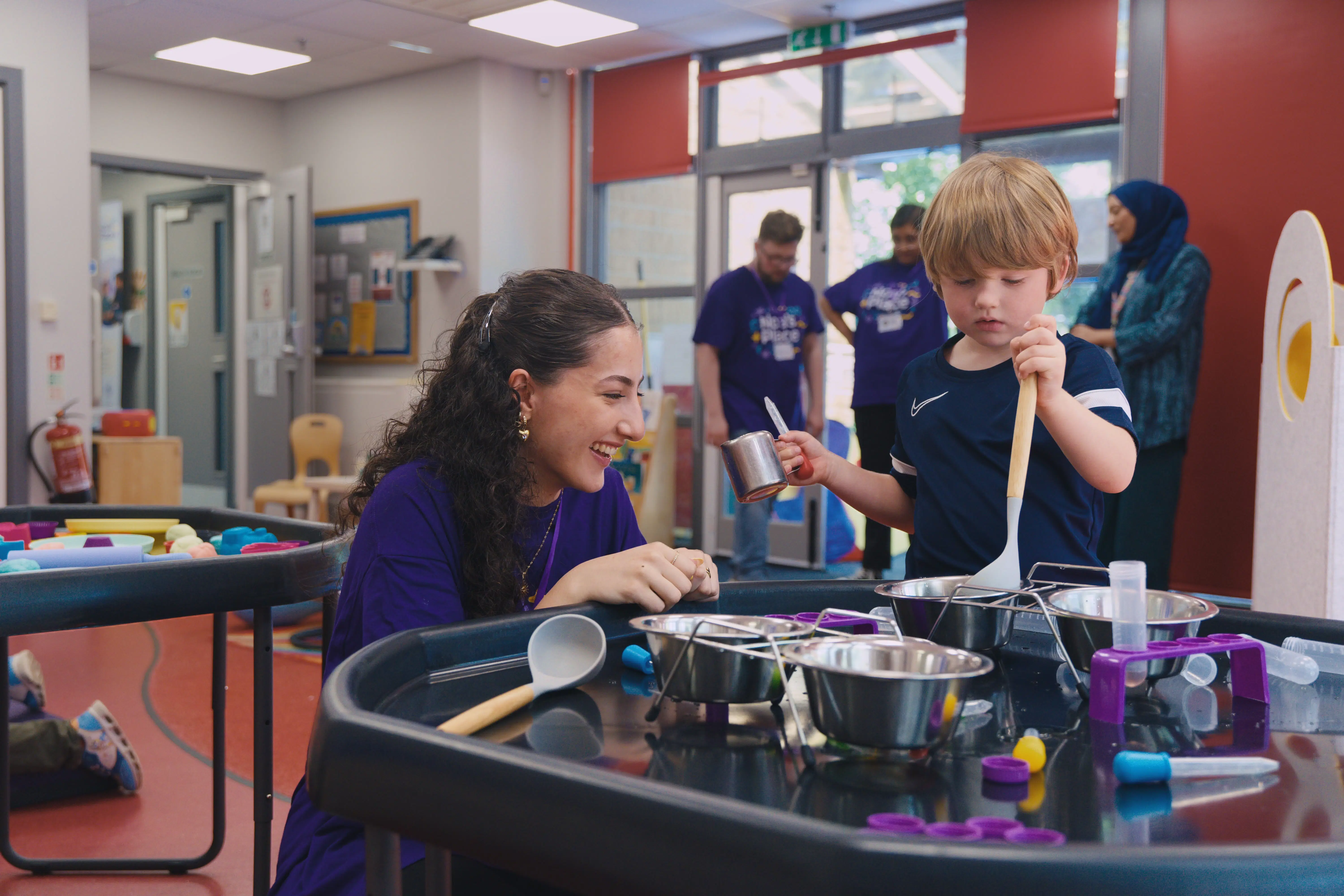
An occupational therapist (OT) helps people carry out the everyday tasks of life: what OTs call "occupations". For a child, these occupations include getting dressed, eating, sitting at a school desk, playing with friends, and regulating emotions.
When working with autistic and neurodivergent children, paediatric OTs focus heavily on sensory processing differences. According to the Royal College of Occupational Therapists (RCOT), OTs assess how a child's brain processes signals from their senses: touch, sound, movement, balance, and interoception (internal body signals like hunger or a full bladder).
Rather than trying to change a child's outward actions, an occupational therapist looks at why a child is struggling. If a child cannot sit still on the carpet at school, an OT asks whether their vestibular and proprioceptive systems are craving movement, rather than assuming they simply need discipline.
Why traditional clinic appointments leave parents drained
If you have ever taken your child to a sterile clinical room for a thirty-minute assessment, you already know the frustration. Children often mask their exhaustion in unfamiliar environments, or conversely, they shut down completely under bright lights and strange smells.
The therapist sees a snapshot of a child on their best or most guarded behaviour. You leave with a generic report that does not match what happens when you try to get your child through the front door of school on a rainy Tuesday morning in Halifax.
That is why family-centred and community-rooted occupational therapy matters so much. OTs who understand neurodivergence look at the whole environment: the classroom layout, the uniform tags, the family morning routine: and work collaboratively with you to make practical changes that fit your actual life.
How OT bridges the gap between home and school
One of the greatest challenges for SEND families in West Yorkshire is the disconnect between home and education settings. A child might hold it together all day at school, only to experience massive meltdowns the moment they walk through your front door.
An occupational therapist bridges this gap by acting as a translator between the child's nervous system and the demands of their environment. By carrying out school observations and home assessments, an OT can recommend specific adjustments:
- Sensory diet plans tailored to your child's specific sensory profile (whether they are sensory-seeking or sensory-avoidant).
- Classroom modifications such as alternative seating, ear defenders, or scheduled movement breaks.
- Practical strategies for transitions between lessons or leaving the house.
These recommendations can then be written directly into an Education, Health and Care Plan (EHCP) or school support plan, giving you firm ground to stand on during annual reviews.
Four simple sensory strategies to try tonight at home
You do not need expensive specialist equipment or a clinical diagnosis to start supporting your child's nervous system right now. Here are four practical strategies recommended by paediatric OTs that you can try this evening:
- Create a heavy work movement circuit: Before asking your child to sit for dinner or homework, give their muscles and joints deep proprioceptive input. Ask them to push the laundry basket across the living room rug, do five wall pushes, or crawl like a bear down the hallway.
- Offer deep pressure input: Many dysregulated children find safety in firm, calming pressure. Wrap your child snugly in a heavy duvet like a burrito, or offer firm, rhythmic back squeezes if they welcome touch.
- Reduce visual and auditory clutter: Turn off overhead fluorescent lights in favour of lamps, switch off background television noise, and keep hallway shoes and coats tucked away in cupboards to lower sensory load before bedtime.
- Use visual countdown timers: Transitioning from play to bedtime is a common flashpoint. Use a visual timer so your child can physically see time passing, removing the surprise and anxiety of sudden change.
Finding occupational therapy support in Halifax and Calderdale
Accessing occupational therapy through statutory pathways requires patience. You can check the Calderdale SEND Local Offer to view local health and therapy services, or speak to your GP, health visitor, or school SENCO to request a referral to NHS children's therapy services.
For families seeking immediate guidance, private paediatric OTs and sensory integration practitioners: such as practitioners registered with the Health and Care Professions Council (HCPC): offer assessments and parent coaching across West Yorkshire.
If you are looking for local community support while navigating these pathways, we are running our Summer Sensory Sessions at Little Stars Family Hub in Halifax. On Thursday, 6 August 2026, we are hosting a special OT drop-in session featuring Louise Bennett from The Little OT Company, where parents can ask questions in a relaxed, non-judgmental space.
You can also explore holiday provision schemes like the Jam Packed Summer programme coordinated via local special schools such as Ravenscliffe High School, which offers inclusive activities for children and young people across Calderdale.
Frequently Asked Questions
Do I need an autism diagnosis to access occupational therapy?
No. NHS and private occupational therapy services generally focus on functional needs, sensory processing differences, and everyday challenges rather than requiring a formal diagnostic label. If your child struggles with daily tasks, self-care, or regulation, you can seek OT support.
What is the difference between occupational therapy and sensory integration therapy?
All occupational therapists train in functional living skills, self-care, and motor development. An occupational therapist who has undertaken postgraduate training in Ayres Sensory Integration® is specifically qualified to assess and treat how the brain processes complex sensory inputs from the environment.
How do I request an OT assessment through the NHS in Calderdale?
You can ask your child's school SENCO, GP, health visitor, or paediatrician to submit a referral to the local children's community occupational therapy service. Be sure to document specific examples of how sensory difficulties impact your child's daily functioning at home and school.
Can occupational therapy recommendations go into an EHCP?
Yes. Detailed recommendations from an occupational therapist regarding sensory diets, environmental adjustments, and equipment form a vital part of Section B and Section F of an Education, Health and Care Plan, ensuring schools are legally required to provide them.
Supporting our community in Halifax
At Noa's Place, we understand how tiring it is to fight for the right support. Founded from lived experience as a dad to an autistic son, our registered charity (No. 1217825) is currently fundraising to build a permanent, sensory-first community hub right here in Halifax. While we work towards that permanent building, our community is very much active through pop-up sessions, parent meet-ups, and free digital resources.
Everyone is welcome just as they are, with absolutely no need to mask or fit in.
Explore our upcoming sessions and events
Last reviewed: 3 August 2026
Author: Penny, SEO & Content Lead at Noa's Place
Sources and further reading:
- Royal College of Occupational Therapists (RCOT)
- National Health Service (NHS) Children's Services
- Calderdale SEND Local Offer
- Ayres Sensory Integration® International
[Sonny handoff brief]
- Key message: Occupational therapy focuses on nervous system regulation and sensory processing, offering practical relief for SEND families navigating the system in Calderdale.
- Target audience: Tired SEND parents (especially mums) in Halifax and Calderdale searching for answers after school meetings or waiting lists.
- Best social formats: Instagram carousel breaking down the 4 simple home sensory strategies; Facebook post highlighting Thursday's OT drop-in with Louise Bennett at Little Stars.
- Pull quote: "OT looks at why a child is struggling, not just the behaviour on the surface."
- Caption hook: Told it's 'just behaviour'? Here is what is actually happening.
- Suggested pillar for Sonny: EDUCATE & USEFUL